

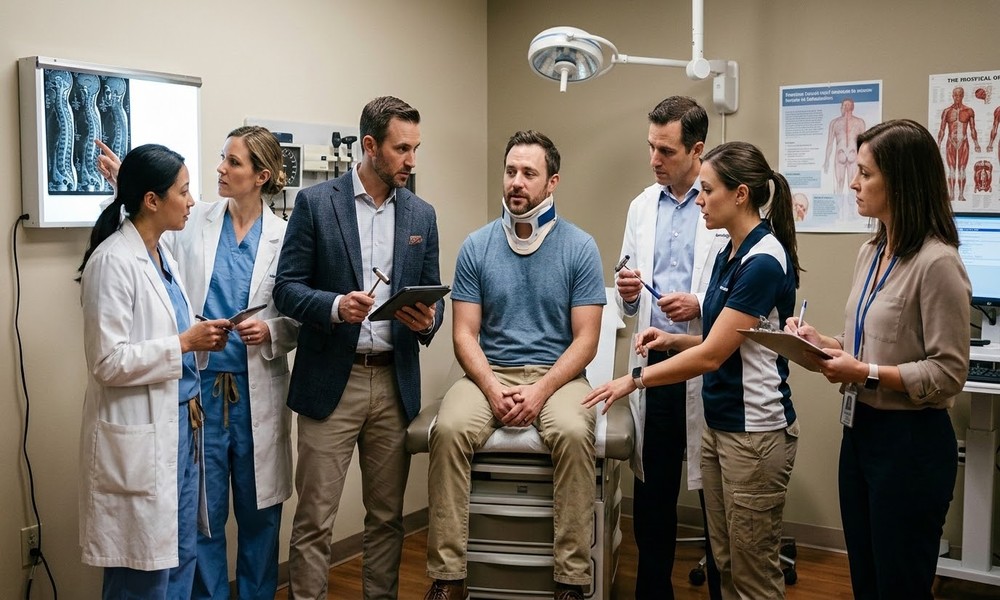
An injury can seem straightforward at first. Someone falls, gets into a car accident, or strains something at work, and the immediate concern is usually pain, swelling, or limited movement. But recovery is rarely that simple. What starts as a single injury can affect nerves, muscles, joints, balance, sleep, mood, and daily function in ways that only become clear over time.
That’s why recovery after trauma often involves more than one medical specialist. Urgent care providers may handle the initial evaluation. Surgical specialists may determine whether the brain, spine, or other structures have been injured. Rehabilitation professionals help patients regain movement and independence. Pain management providers can support day-to-day function while healing continues. In many cases, the best outcomes come from several providers addressing different parts of the same problem, not from one provider trying to handle everything alone.
The First Visit Often Shapes the Rest of Recovery
The first stage of care matters because it helps determine how serious the injury may be and what needs to happen next. After a fall, sports injury, workplace accident, or minor collision, people often need prompt assessment to identify fractures, soft tissue damage, possible concussions, or signs that a condition is getting worse. Early evaluation can also establish a timeline of symptoms, which becomes important when care continues across multiple providers.
Urgent care often plays an important role here. Carolina Urgent Care offers walk-in injury care and evaluation, physical exams for trauma-related complaints, and on-site imaging such as X-rays to help identify fractures or determine whether a patient needs a higher level of care. The clinic also highlights services related to workers’ compensation and follow-up coordination, which shows how early documentation and referral can shape the next stage of treatment.
A Single Injury Can Affect More Than One Body System
Recovery is complicated because the body does not heal in neatly separated parts. A fractured vertebra may also irritate nearby nerves. A concussion can lead to headaches, sleep disruption, concentration problems, and balance issues. A shoulder or neck injury may cause someone to move differently, which can place new strain on the back or the opposite side of the body. Even when the original trauma affects only one area, secondary problems often develop as the body compensates.
That is one reason a team approach is so common in trauma care. Each specialist sees a different part of the recovery process. One clinician may focus on diagnosis, another on structural stability, another on mobility, and another on symptom control in everyday life. When those perspectives are coordinated, treatment is more likely to address the full impact of the injury instead of just the most obvious symptom.
Brain and Spine Injuries Need Specialized Assessment
Some injuries need immediate specialist input because delayed treatment can increase the risk of long-term complications. Trauma involving the head, neck, or spine is especially serious in this respect. Symptoms such as confusion, severe headache, weakness, numbness, coordination changes, or worsening pain may point to neurological involvement rather than a routine strain or bruise.
Haynes Neurosurgical Group says it provides trauma and fracture treatment for brain and spine injuries, along with care for traumatic injuries affecting both areas. Its materials describe these conditions as neurologically significant and note that they can affect motor function, sensory perception, and cognitive ability. That kind of specialty evaluation matters because a patient may need more than temporary symptom relief. They may need a neurosurgical opinion on structural damage, nerve compromise, or another time-sensitive issue that calls for advanced treatment.
Not Every Problem Is Visible During the First Exam
One of the challenges in injury recovery is that some conditions only become clear after the first few days. Adrenaline and stress can mask pain right after trauma. Swelling may increase later. Nerve symptoms can appear once inflammation develops. Someone who seems stable at first may later notice dizziness, radiating pain, numbness, weakness, or difficulty with normal movement once daily activity picks up again.
That is why follow-up care matters. A second or third provider is not necessarily replacing the first one. More often, they are building on earlier findings as the picture becomes clearer. A patient may start in urgent care, then move to specialty care when symptoms continue or when imaging reveals something more complex. That progression is common and often appropriate, especially after injuries involving the neck, spine, or nervous system.
Neck and Back Symptoms Often Need Focused Spine Care
The neck and back deserve special attention after trauma because these areas contain bones, discs, nerves, muscles, and supporting ligaments in a small but critical space. Pain in these regions can interfere with turning the head, lifting, sitting, sleeping, driving, and working. In some cases, the injury is mostly muscular. In others, it may involve disc damage, spinal stenosis, instability, or nerve compression.
CalSpine MD presents its practice as focused on neck and spine conditions, including neck surgery, back and neck pain treatment, and other spine-related procedures. Its treatment pages describe cervical spine problems that can cause pain, stiffness, numbness, weakness, and nerve-related symptoms. They also note that certain procedures are designed to relieve pressure on nerves or stabilize the neck when needed. For patients whose symptoms continue beyond the initial injury phase, a spine-focused evaluation can help determine whether conservative care is enough or whether more specialized treatment should be considered.
Rehabilitation Helps Patients Recover Function, Not Just Heal Tissue
Healing on paper is not always the same as recovering in real life. A fracture may be stable, or a surgical site may be progressing well, but the patient may still struggle with balance, endurance, range of motion, or confidence in movement. Rehabilitation helps close that gap by focusing on function.
This stage of care often includes physical therapy, occupational therapy, guided exercise, and structured activity progression. These services can help patients relearn movement patterns, improve strength, reduce stiffness, and safely return to work or daily routines. Rehabilitation also creates a way to track whether symptoms are improving as expected. If they are not, the rehab team may flag the need for additional imaging, specialty reassessment, or a change in the treatment plan.
Pain Management Can Be Part of Recovery Too
Pain is not just a symptom. When it lingers, it can slow recovery by interfering with sleep, physical therapy participation, concentration, mood, and normal activity. Some patients begin avoiding movement because they worry they will make the injury worse. Others get stuck in a cycle where pain leads to tension, tension leads to guarded movement, and guarded movement creates even more pain.
For that reason, pain management is often a practical part of trauma recovery. California Mobile Acupuncture describes in-home acupuncture services that include support for chronic pain, neurological conditions, and injury recovery, with a broader focus on calming the nervous system, reducing inflammation, and improving function. Its materials also describe pain management as a non-pharmacological option and note experience with spine and disc injuries. In a coordinated care model, supportive therapies like acupuncture may be used alongside conventional treatment to help some patients manage discomfort and stay engaged with the rest of their recovery plan.
Coordination Matters as Much as Expertise
Having multiple specialists only helps when care is actually connected. If each provider treats the patient in isolation, important details can get missed. One specialist may not know what imaging has already been done. Another may not realize neurological symptoms are getting worse. A rehabilitation provider may need restrictions from a surgeon before advancing activity. Pain treatment may need to be adjusted so it supports, rather than delays, functional recovery.
Good coordination usually involves shared records, clear referrals, updated symptom histories, and realistic goals. Patients also play a central role. Keeping track of symptoms, medication changes, imaging results, and questions for each appointment can make the process smoother. Recovery tends to go better when everyone understands both the original injury and the patient’s current stage of healing.
Recovery Often Requires Reassessment
Many people expect recovery to move in a straight line. In reality, progress is often uneven. Some symptoms improve quickly while others linger. A patient may regain strength before pain decreases, or pain may ease before stamina returns. Setbacks do not always mean treatment failed. Sometimes they simply reveal another part of the injury that needs attention.
That is another reason more than one specialist may be needed over time. The right provider at the beginning of recovery may not be the only one needed later. As symptoms change, the care plan may shift from diagnosis to stabilization, from stabilization to rehabilitation, and from rehabilitation to longer-term symptom management. That sequence is common in injury care because healing involves different needs at different stages.
Conclusion
Recovering from an injury is often more complex than treating the initial damage. Trauma can affect multiple body systems at once, and symptoms may evolve as swelling changes, activity resumes, and the body begins to adapt. What seems like one problem may actually involve diagnosis, structural care, nerve assessment, rehabilitation, and pain support all at once.
That is why recovery often requires more than one medical specialist. A coordinated approach can help patients move from immediate evaluation to longer-term healing with better continuity, clearer decision-making, and a more complete understanding of what recovery really takes.
